

The Wisdom Slow Burn
How does wisdom grow in the age of AI?


This Weekly Edition of Inkwell features Jen Pollock Michel
IT IS THE SUMMER OF 2007, and I am newly pregnant with twins. These are babies four and five, and soon I am very big. In January, weeks before they are born, I watch Obama’s Iowa caucus victory on a boxy Sony TV from the basement couch. I am never better informed than when I am as slow-moving as a sperm whale.
It is a long-lost era now—this eve of the smartphone. It is a time when it is still possible to watch a news broadcast, turn it off, and wait 24 hours for the next one. When the first iPhone hits the market, I don’t buy one. It is a time when there is still the illusion of choice.
Months after the release of the first iPhone, I capitulate. I imagine I am buying a phone with a search engine. I do not yet know this pocket computer will gain the feel of a phantom limb. Nor do I yet imagine time shattering into shards smaller than seconds, filled with scrolling and swiping, convincing myself I’m saving it as I lose it. Least of all, I do not yet suspect I will start to suffer what experts now call “continual partial attention”—that I will largely lose access to the immersive pleasures of reading and rarely recover them except for on the odd Sabbath afternoon and the occasional summer vacation.
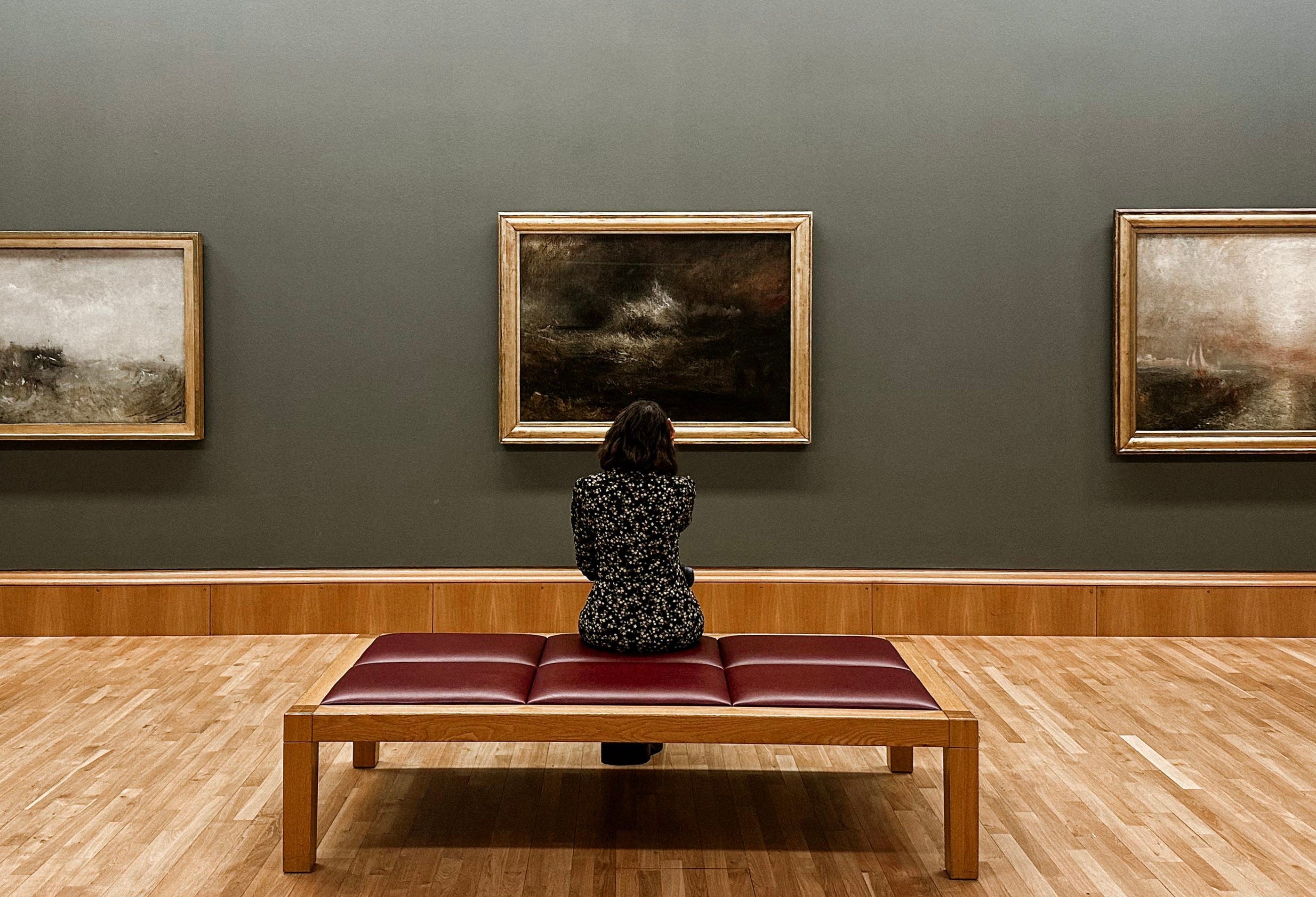
To see it now is to notice a glaring naiveté. Technological change, the late Neil Postman taught, is always ecological in kind. To adopt a new technology, we don’t simply add a tool to our assortment. We experience a change in the conditions of our lives. As new technologies take hold, we adopt new habits, new expectations, new modes of being.
Nearly 20 years later, we’ve arrived at a new technological frontier with the advent of artificial intelligence. We can’t predict the ways its powers will change us and the experience of our lives, though it is certain one world will be lost, and a machine-first world gained.
ASPIRATION AND APOCALYPSE are the poles of this moment in which every good seems mostly to be measured by the speed of its delivery. In truth, I can feel the direness for a truly human future, especially in the landscape of arts and culture. I fear artless AI content will become a preferred mode of communication, private and public, and I wonder what will inspire our willingness to produce effortful literary and artistic works—the kind that increase our capacity for love, courage, and wisdom. I also wonder how and where we will cultivate the fortitude needed to engage such works.
I worry for Sabbath afternoons, summer vacations, and every form of leisure that will become alien and obstructive to our endlessly efficient lives. I worry for myself as reader and writer, wondering how resistance will be possible when AI tempts all of us with the desire to be free from the burden to think.
Scholar Maryanne Wolf has sounded the alarm in her most recent book Reader Come Home: The Reading Brain in a Digital World, where she engages familiar complaints of our attentional neglect. She points out we are a citizenry incapable of attending to demanding texts that require skills like “critical thinking, personal reflection, imagination, and empathy.” Without such skills, Wolf argues, we lose civic formation and endanger our democracy.
These are reasonable warnings about our cognitive plight, and they are applauded by the majority of thinking persons. We could imagine they should carry more heft in the age of AI, when it will become more difficult to tell fact from fiction, when content, generated by pattern recognition, will be hyper-attuned to the confirmation of our bias. However, this would be to assume we will still find value in what is agonizingly slow and continue to willingly submit ourselves to what cannot be hurried. This would mean believing in something more valuable than time itself.
IN THE AI ERA, there is a moral logic involving time. It’s why well-meaning people are suckered by its promises to Cure cancer! and Solve climate change! When immediacy of information is prized, when optimization is superior to formation, time is always an enemy to outwit or an obstacle to overcome.
When something takes time, it is perceived as a failure. We could wonder what willingness we will sustain to produce artistic goods that require the effortful participation of reader and viewer; goods that stoke an appetite for beauty, a yearning for goodness, and a commitment to truth, none of which can be optimized. What, then, will warrant the production and reception of cognitively demanding works such as those of Dante, Milton, and Dostoevsky?
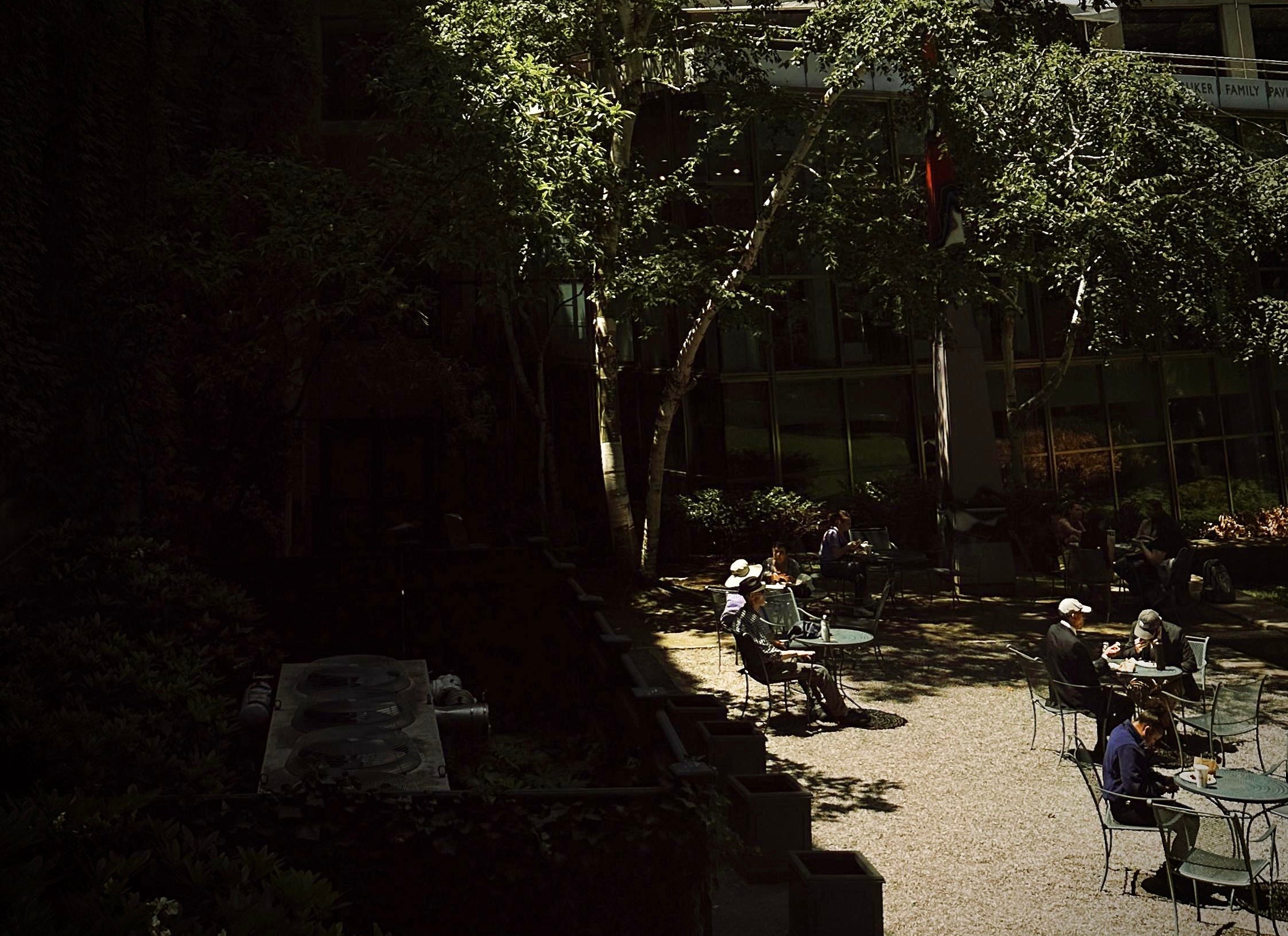
Even death itself is succumbing to the principles of efficiency. In nations like Canada, one in twenty deaths now happen by choice, patients dying at the hands of their presumably well-meaning doctors. “It’s too soon to call euthanasia a lifestyle option in Canada,” writes Elaina Plott Calabro, which seems only to say the proverbial writing is on the wall. We are a people impatient in life and impatient in death, intolerant of suffering the time it takes to make meaning.
It might seem a little exaggerated to cite the rising cases of euthanasia in Canada as any kind of proof-text for what’s ahead for us in an AI future. But perhaps electing to die with speed rather than slowness, this example of refusing to reckon with any good in the liminal spaces of life, reminds us how much we are going to need the formative influences of art and culture in the years to come.
I don’t mean we will need blatant didactic stories and pictures, instructing us in the principles of a good life (and a good death). AI will be happy to supply this kind of content for us when we ask it. I mean we will need access to artistic and cultural experiences that refuse to capitulate to our craven desires for easy access and immediate reward—experiences that demand something of us and promise nothing more than our moral and spiritual formation.
I AM OLD ENOUGH to know how fitful and slow the enterprise of wisdom really is. Life is not a pattern to recognize and regurgitate, as any good novel will remind us. It’s one reason our Holy Scriptures are replete with poetry, parables, narratives, and metaphors, all of which demand attention.
Perhaps there’s nothing more inefficient, and formational, than a story that begins like this: “There was a man who had two sons.” This is a story I have been returning to in these years in which my children have grown up, some wandering far. Jesus certainly risked the patience of his audience, who—in our day—might have demanded a more straightforward accounting of grace.
To engage the parable of the Prodigal Son is to submit oneself to the risk of being transfixed, even transfigured, by an encounter with this family. Jesus sets before us a younger son who wishes his father dead and his inheritance in hand and an older brother who refuses the responsibility of mediating the family conflict. Then, of course, we meet the father, who undignifies himself by running, robe in hand, when the younger son returns.
I ask ChatGPT to give me the meaning of this parable, and after a quick summary of the story, it gives me four numbered points:
ONE: I’m meant to understand God’s mercy and forgiveness
TWO: Repentance and restoration
THREE: Warning against self-righteousness
FOUR: The joy of reconciliation.
Nothing about this short list is blatantly wrong or even hallucinatory—but none of it works beneath the skin. It doesn’t gnaw, lingering in the mind as it did with Henri Nouwen, when for years he contemplated the parable alongside Rembrandt’s The Return of the Prodigal Son. The story, engaged meditatively, became prismatic. At first, Nouwen saw himself as the younger son; alternatively, he became the older brother. Finally, however, he saw the invitation to become the father, opening his arms to a world in need of hospitality.
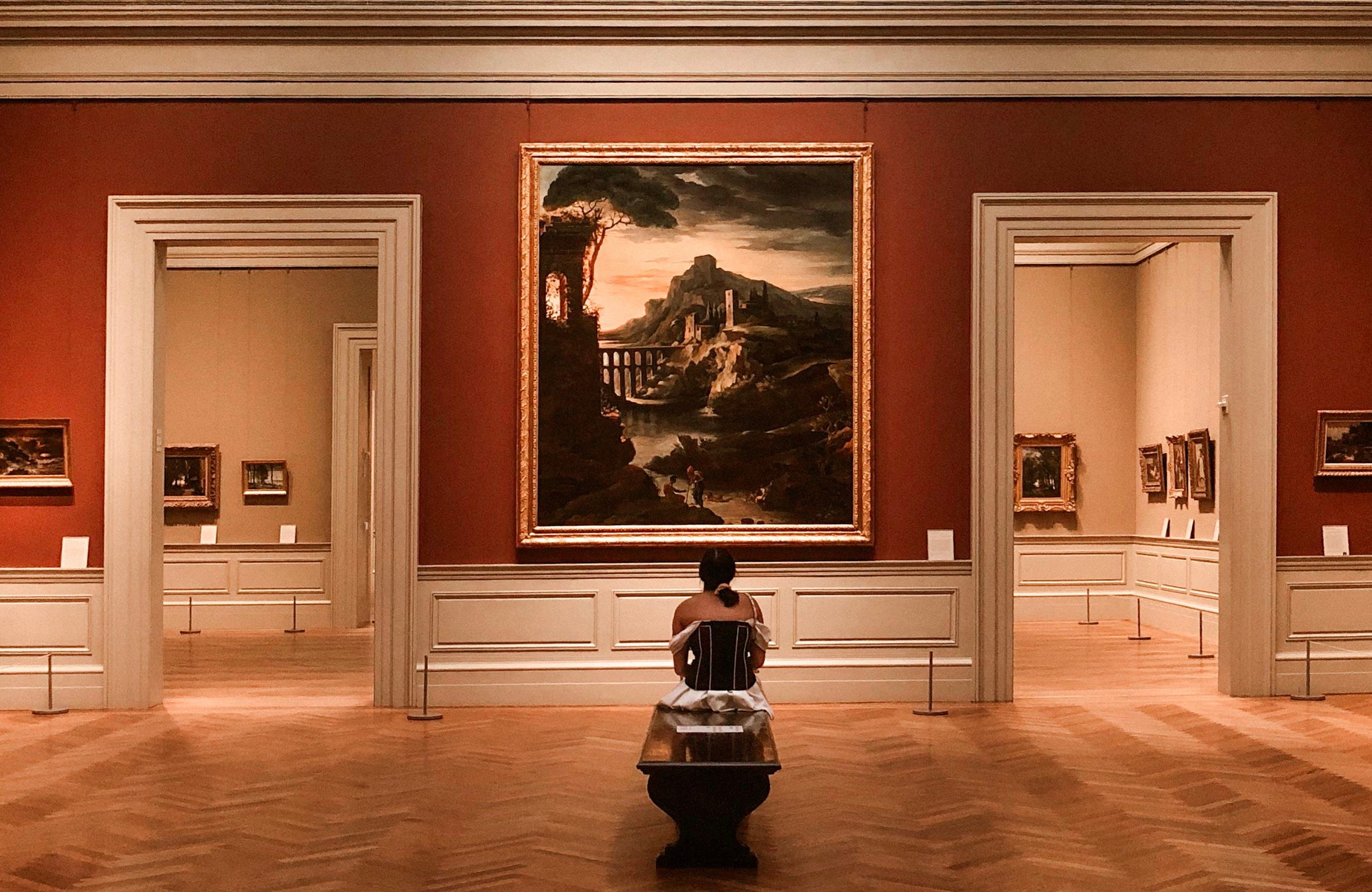
There is more power in a story than in factual summary. There are always the ambiguities, the dramatic reversals, the human realities that are predictable and surprising at the same time. This is the power of art, working as it does the levers of imagination and allowing us to try on another reality, even another self. None of it is hurried, which seems obvious, given that we can return over and again to a story like this parable and find it new every time.
To read a story is to engage a slow formation. To attend a painting, with a sense of devotion, requires a sitting still. Art cultivates the virtue of fortitude, a virtue that will be in short supply in the efficient age of AI. For those of us who still believe that a virtuous future is more beautiful than a pragmatic one, we’ll keep reading and writing—and praying for ears to hear.
📰 Read in print: Here’s the link to a quick tool for those who want to get their hands on this essay and read it analog style.

Jen Pollock Michel
Author & Writing Mentor
Jen is the author of six books, including A Rule for the Rest of Us, releasing September 2026. Jen also serves as the first-year writing mentor in the Whitworth University low-residency MFA program in Creative Writing. You can find out more about Jen at jenpollockmichel.com.
📸 Photography by Elizabeth Sanders
 | A guest post by
|
love it.
imagine thinking you could fast track growth
Bonjour, Jen. J'ai beaucoup apprécié ce que tu as écrit. Merci.