

What Should Remain Hidden?
Enchantment is shy


This Weekly Edition of Inkwell features Sherry Ning
WE’RE NOT MEANT to see or know everything about everyone, not even our closest friends. Paradise is lost when we eat from the Tree of Knowledge. The myth of Artemis and Actaeon is about one person showing too much and another seeing too much.

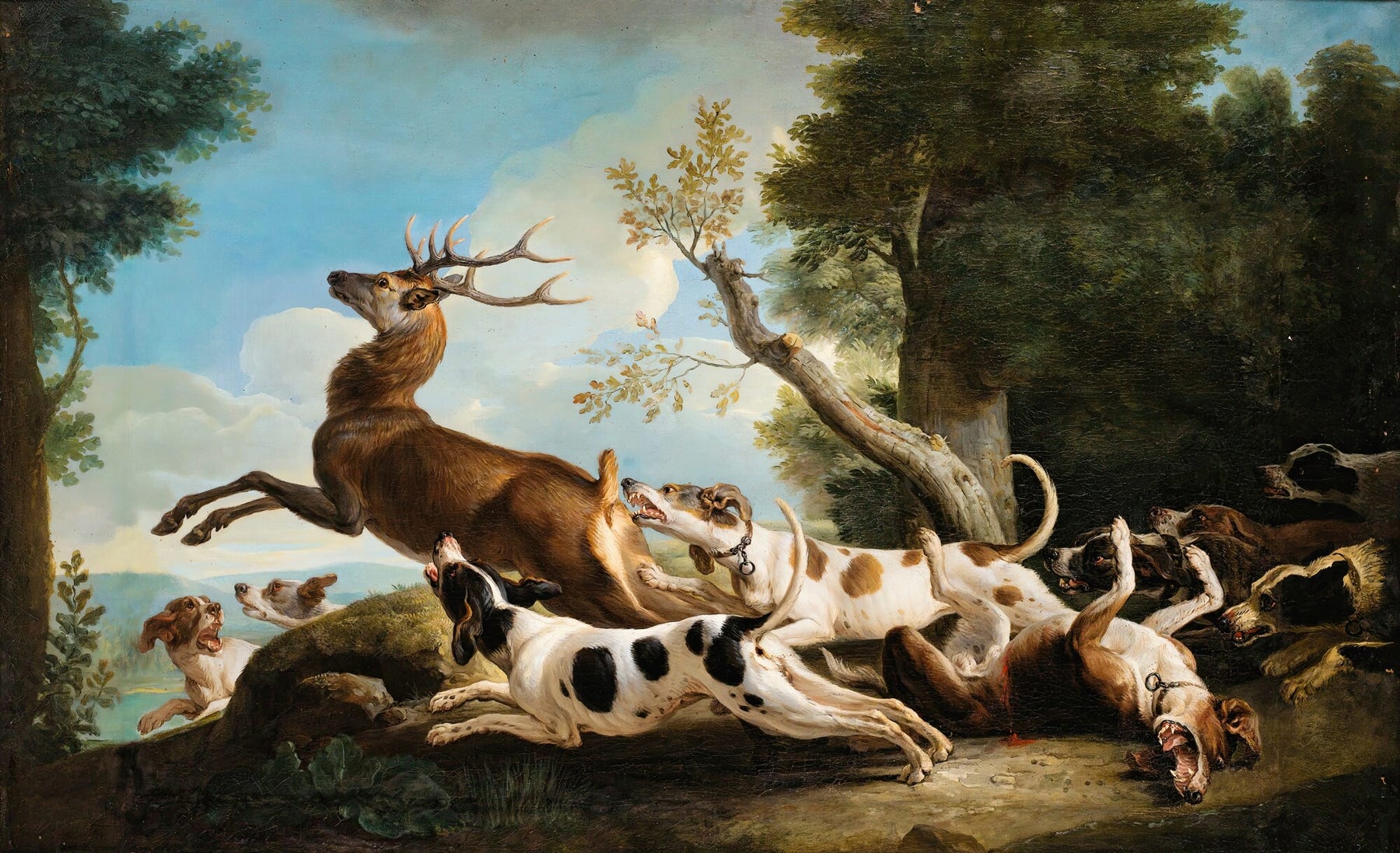
ACTEON HAD ALREADY GROWN tired of the oiled muscles and the hooting of the hunt, which temporarily masked his desire for something softer and more forbidden than antlers and tusks. So, he left the others and trekked into the older part of the forest, where spring had saturated the air with the smell of tufa and crushed violet. The half-bloomed olive trees closed in like curious old women watching from behind their shutters. Behind him, the hounds followed down the primrose path.
The water made itself heard before it was seen—a trickle or a babble punctuated by a splash. There was a woman, a bathing woman—no, a goddess. He stopped to watch. Her eyes were closed, and two sickle-shaped dimples ornamented the sides of her mouth. There was a moment when he saw a beauty mark on her wrist as she raised her arms to push her unspooled hair behind her neck, sending a waterfall of russet down her back. He saw that her armpits were as smooth as a statue’s. Her shoulders rose and fell with the calm of someone who has never had to run from anything and never will.
Artemis moved how she wanted to, and she turned when she wanted to. On this turn, her eyes widened at the sight of the hunter with the unclean gaze, the trespass not of feet but of attention. Actaeon, who had thought himself a man of will, a man of lineage and rationality, felt his mouth open in apology. But it was too late, and before he could speak, she had already seen him, and in seeing had decided, and in deciding had unmade him—not with a spell or a scream men expect when they imagine witchy, feminine wrath, but with a glance, cold and silver and merciless.
Then the change began: with a pull in the spine… a tightening in the ribs… a splitting of the breath… and his knees buckled and his head sprouted great antlers and his limbs found the wrong names for themselves. Still, he tried to crawl toward her, to beg and to be near, because what she had taken from him was not just his body. She had taken the very story of himself, the myth in which he played the proud victor, the poor victim, or anything more than a stag with a cry in its throat and dogs in its wake.
And when the dogs found him, they did what they were trained to do, and when they were done, they sat in a ring around the shredded thing that had once been their master. Eyes blank, they waited—because they didn’t understand why the horns had not sounded or why the man did not appear.
The story ends here. While Artemis is no exhibitionist, the message is clear: Not everything can be looked at and leave you as whole as you were before. Seeing too much can shred you into pieces. A showy culture without privacy loses the ability to contemplate. Our culture of showing corrodes the very art of observing.
PEOPLE SAY THAT CONTEMPLATION has gone extinct because of shortened attention spans, an overabundance of stimuli, and a compulsion for entertainment. But these are just symptoms. What sits beneath our intolerance of boredom? Why has it become so difficult to think deeply and thoroughly and appreciate one thing before moving on to the next? As Carl Jung said, “Thinking is difficult, that’s why most people judge.”
Yet what is far more devastating (and far less reversible) is the cultural conviction that everything must be shown. When everything must be seen, nothing can be dwelt upon. The unphotographed moment is a missed opportunity. The locked door is an insult; a dare, even, for the inner paparazzi that itches to pry. Disclosure and so-called unfiltered authenticity have been so praised that secrecy now feels like theft.
“Contemplation” comes from the Latin, contemplatio, which comes from templum—the space marked out for augury, a sacred space reserved for watching the signs of the divine. Templum is also where we get the word “temple”, a consecrated space. With the prefix con-, meaning “with”, contemplation means to be with the temple, or to dwell within the sacred space of attention. Contemplation is much deeper than thinking. It implies a religious observation. It implies intention, slowness, interiority, reverence.
Meanwhile, exhibition means to display, or, in YouTube’s old slogan, “Broadcast Yourself.” Exhibitionism is about exposing your privacy and parading your nakedness. It implies flashiness and an offensive lack of modesty. A culture that pushes for everything to be in-your-face makes it difficult to identify, let alone respect, the sacred. As a result, the world is thinned to a series of backdrops: landscapes framed for the lens, meals plated for the photograph, sunsets watched only long enough to be posted.
Exhibitionism turns places into décor, moments into promotional stills. Human lives are pressed flat into their own reflections—two-dimensional avatars on a screen, endlessly curated but rarely known. When people are addicted to fanfare, it leaves no room for the gaze to rest, and attention loses its depth. When one person shows too much because they’re afraid of missing out, another person inadvertently turns into a voyeur.
A space cannot be sacred if it is designed for exhibition. The moment the templum becomes a showroom, contemplation fades. The spirit of Actaeon is the strongest on social media: our gaze is no longer the gaze of the augur but the prying eyes of the audience. We look at things not to meditate on them or to learn from them, but so we have something to broadcast or share in response in the digital agora.
We are not living deliberately or, as Henry David Thoreau said, sucking out all the marrow of life: “I did not wish to live what was not life, living is so dear; nor did I wish to practise resignation, unless it was quite necessary. I wanted to live deep and suck out all the marrow of life, to live so sturdily and Spartan-like as to put to rout all that was not life, to cut a broad swath and shave close, to drive life into a corner, and reduce it to its lowest terms.”
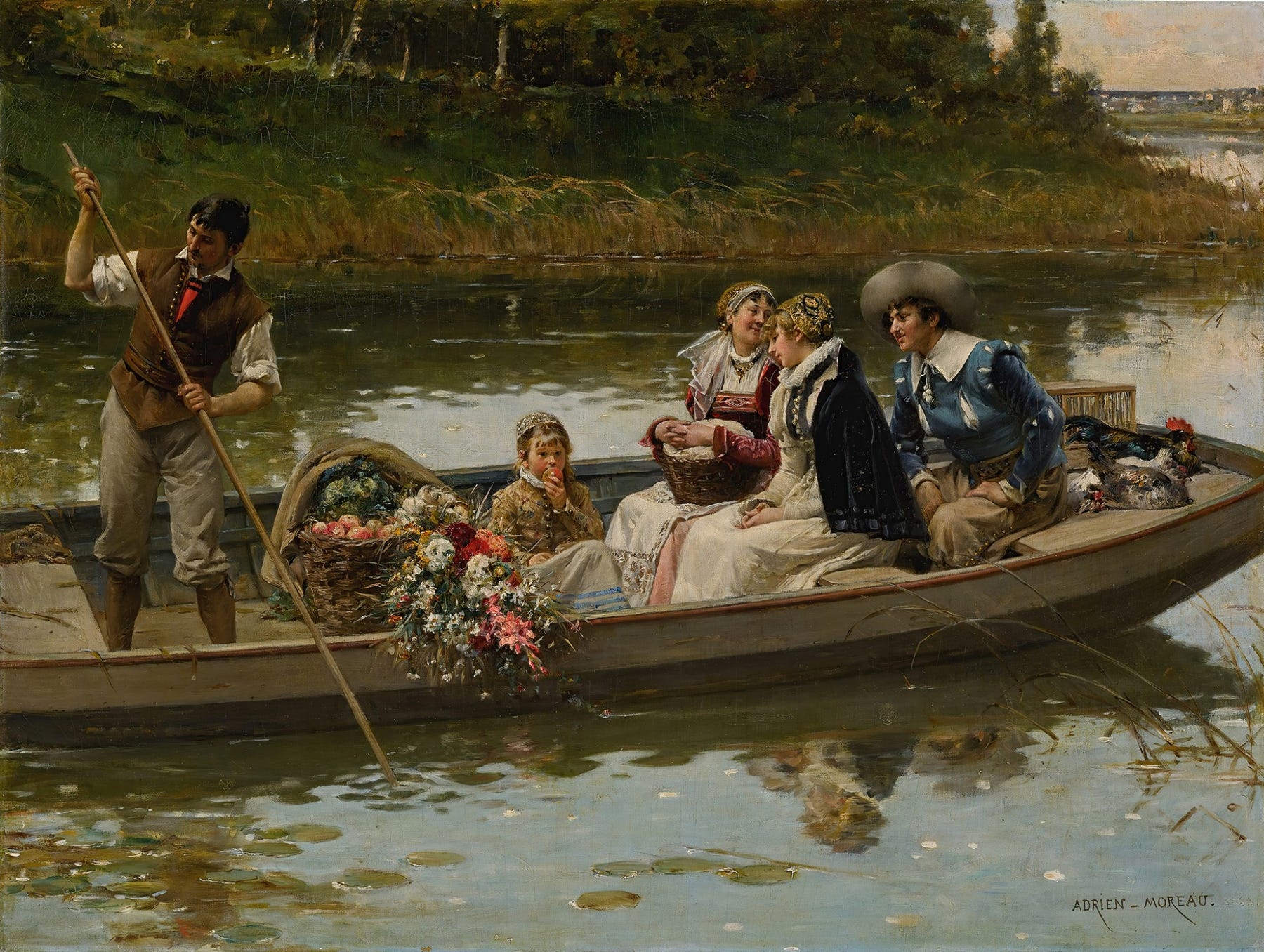
YOU HAVE TO STAND STILL so that the enchantment of the world can step out of its shyness. Contemplation isn’t measured by time or the amount of given information, but by stillness. This is also why contemplation is the process of recognizing beauty. Beauty, in its old sense, was never just veneer or a matter of good breeding. Beauty is a momentary happening of a glint of truth surfacing in the material world. It’s not a phenomenon we create to amuse ourselves, but a moment of something divine making itself perceivable to human eyes. “Beauty is not caused, it is,” said Emily Dickinson.
Without contemplation, beauty curdles into the easy glitter that exhibitionism adores. In a culture that bombards the senses with flashiness, we forget how to pick out what’s rare from what’s showy if we try to match the speed at which we are fed media like foie-gras geese. Only the gaze that refuses to hurry or intrude can tell: when beauty shows itself, you’ll not only find it sweet but find it as a pulse of unignorable recognition, a sight pulling you toward what is real, toward what lives beyond the reach of cameras and screens and magazines.
If we don’t keep the sacred hidden, we might forget how to see it at all.

Sherry Ning
Writer
Sherry is taking a deeper look at things. She writes about experiences you've had but don't know how to describe—from heartbreak to the feeling of self-sabotage to the joy of boredom. Ultimately, her corner of the Internet, www.sherryning.com, is about seeking beauty and creating an enchanted world.
What did you think of this essay? Share your thoughts with a comment!
 | A guest post by
|
Thanks for having me @inkwell! ❤️🔥
I love this piece, particularly the insight that "you have to stand still so that the enchantment of the world can step out of its shyness." The thoughts on beauty resonate with what I wrote in Beauty Is Oxygen, that "beauty is not a thing to be used, purchased or achieved. Beauty must be encountered, witness, and received."