

Get Inside Your Body
How to seek wonder in the age of machines


This Weekly Edition of Inkwell features Sherry Ning
People will come to love their oppression, to adore the technologies that undo their capacities to think. — Aldous Huxley
SCIENCE FICTION OFTEN DEPICTS dystopia as a future where machines become too human. The story goes like this: technology gains consciousness, turns its cold gaze back on its makers, and decides we are inefficient, too sentimental, or just obsolete. Then, it rebels. The humanoid enslaves. Alas, humanity is brought to an end by its own creation.
But this trope misses the bigger threat: the real danger is not that machines will become like us, but that we will become like them, and, in the process, lose what it means to be human.
THE REED WARBLER’S NEST sits low among pale green stems at the edge of calm water, woven from grass, reed fiber, and spider silk, suspended just above the mirror surface where insects skim, and frogs vanish. The air is damp in the early light, and the marsh hums softly with wings and ripples as a delicate cradle nestles inside the bunches of reeds, held in place by tension.
Inside its nest sit four eggs, one of them a little bigger than the others but nearly identical. The chick of this egg emerges early: naked and muscular, a blind mechanism of leverage and competition, the impostor begins to shove the warbler’s eggs over the rim with all its might. Its body arches against the curve of the nest, and one by one the eggs tip over the edge and disappear into the water.
At last, an only child, with parents who feed the blooming red mouth out of instinct rather than recognition, the chick grows quickly. A tenant swollen from borrowed effort, the monopolist soon overfills the nest and dwarfs its deceived parents.
The cuckoo bird is a parasite to the warbler: it’s an organism that benefits its own survival by leeching off of another’s resources. Nature means to tell us that what we give our attention to is what survives.
SOMETIMES WHEN I LOOK at my screen time, I feel like the warbler—deceived by what I’ve adopted—realizing I’ve fed my attention to a hoaxer, to a presence that makes itself appear urgent and important in the moment, but grows more useless the more I nourish it. Somewhere along the way, the things I meant to cherish and protect, things like uninterrupted thought or the slow fermentation of ideas, slipped silently out of my nest.
The way our screens rule over us resembles how Carl Jung described the way slaves silently overshadowed Ancient Rome: “Every Roman was surrounded by slaves,” he wrote. “The slave and his psychology flooded ancient Italy, and every Roman became inwardly, and of course unwittingly, a slave. Because living constantly in the atmosphere of slaves, he became infected through the unconscious with their psychology. No one can shield himself from such an influence.” The commander absorbs the condition of what they command.
The machinification of human living has also shown up in our language.
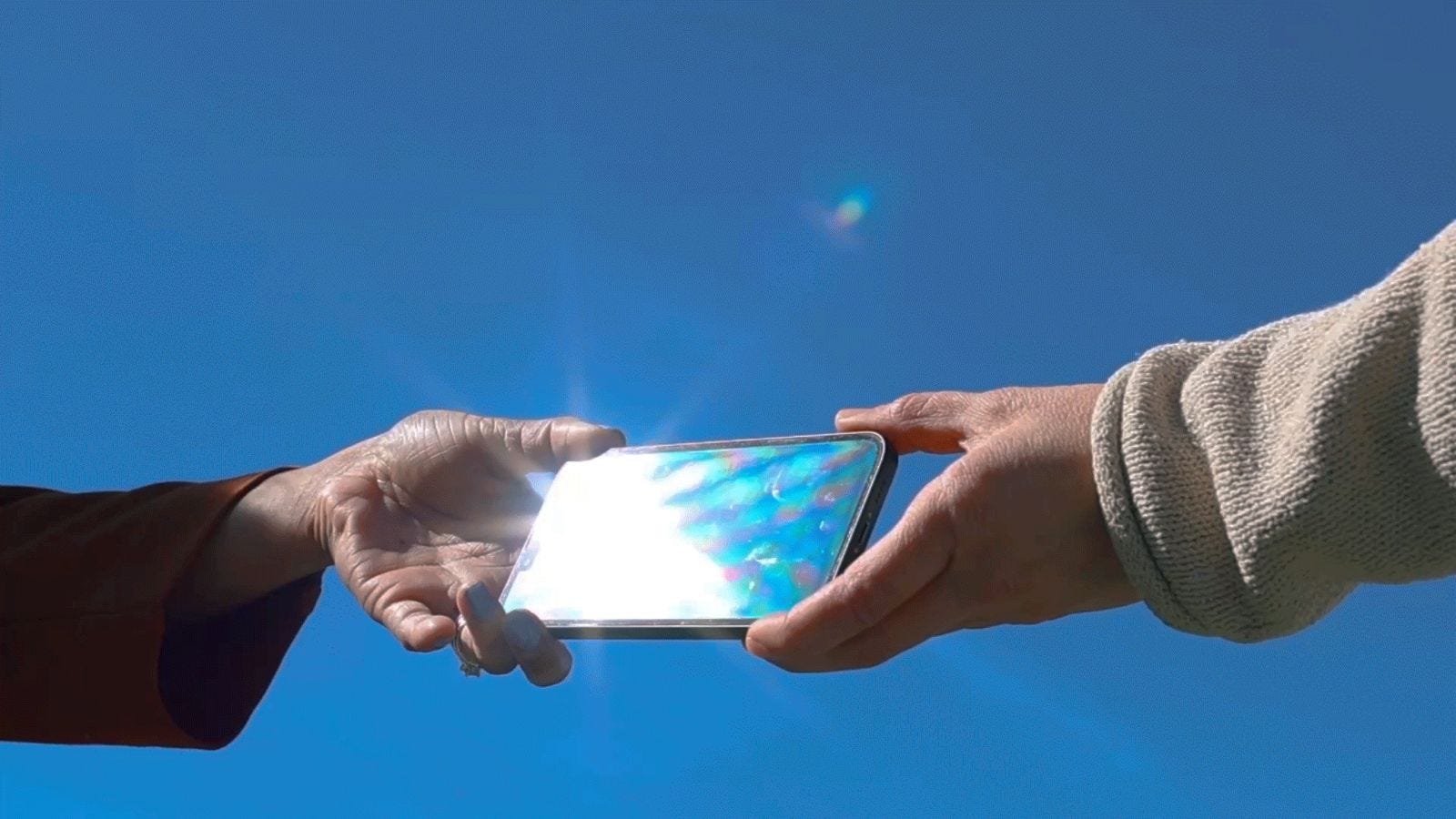
Our language has borrowed from technology so extensively that we describe ourselves through its metaphors: the brain as a computer, the body as hardware, hunger as fuel shortage, fatigue as low battery. When we see ourselves through this lens, our perspective on what it means to be human is reduced to something mechanical: food becomes nutrition instead of taste. Eating becomes fueling. Sensation becomes data.
And when we imagine ourselves as machines, when technology floods our psyche, the irreducible richness of being human starts to fade. Slowly, we become more like the tools we use, because what we pay attention to shapes us in return.
EXPERIENCE, NOT INFORMATION, is why we’re here in the first place, and it demands our full presence, our willingness to embody. It demands that we feel all pleasures and pains without dilution, that we peer into the full spectrum of ecstasy and loss. To treat the body as something we “own” rather than something we inhabit is to exile ourselves from the place where meaning takes root.
We manage our bodies from a distance, tracking steps and macros, when what we should be looking for is immersion. Technology can make us lose our desire for Real Experience. It makes us easily amused by showing us images and videos of things we can’t caress or taste—it is not a replacement for all the textures and sensuousness the world offers.
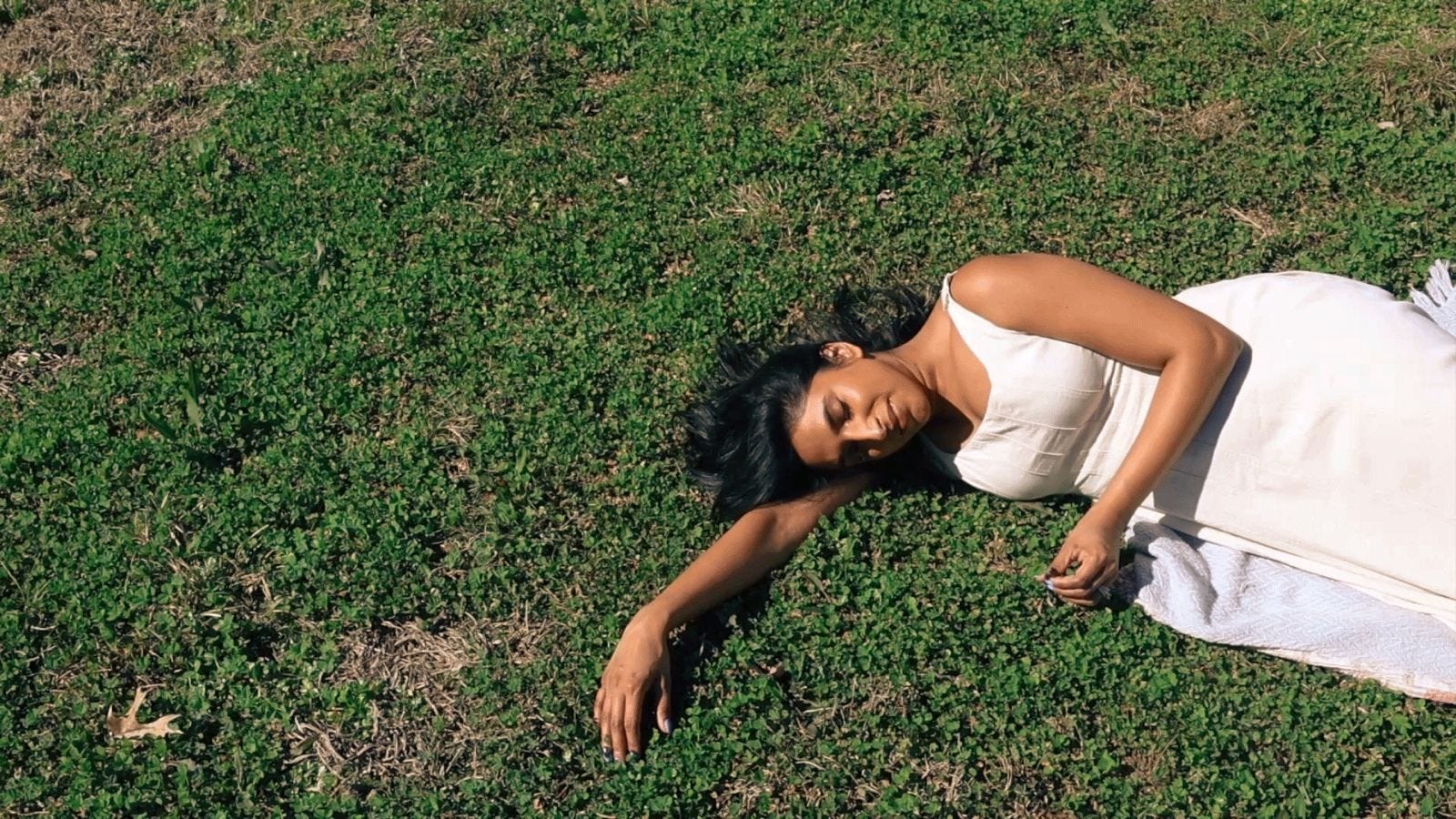
People say “touch grass” to mean getting away from a screen, and it’s kind of a joke, but literally, it’s true: touching grass is the capacity to dwell in physical reality, to let the body speak its own language of temperature and pressure, of scent and color. As William Blake says, “Man has no Body distinct from his soul; for that called Body is a portion of a Soul discerned by the five senses, the chief inlets of Soul in this age.”
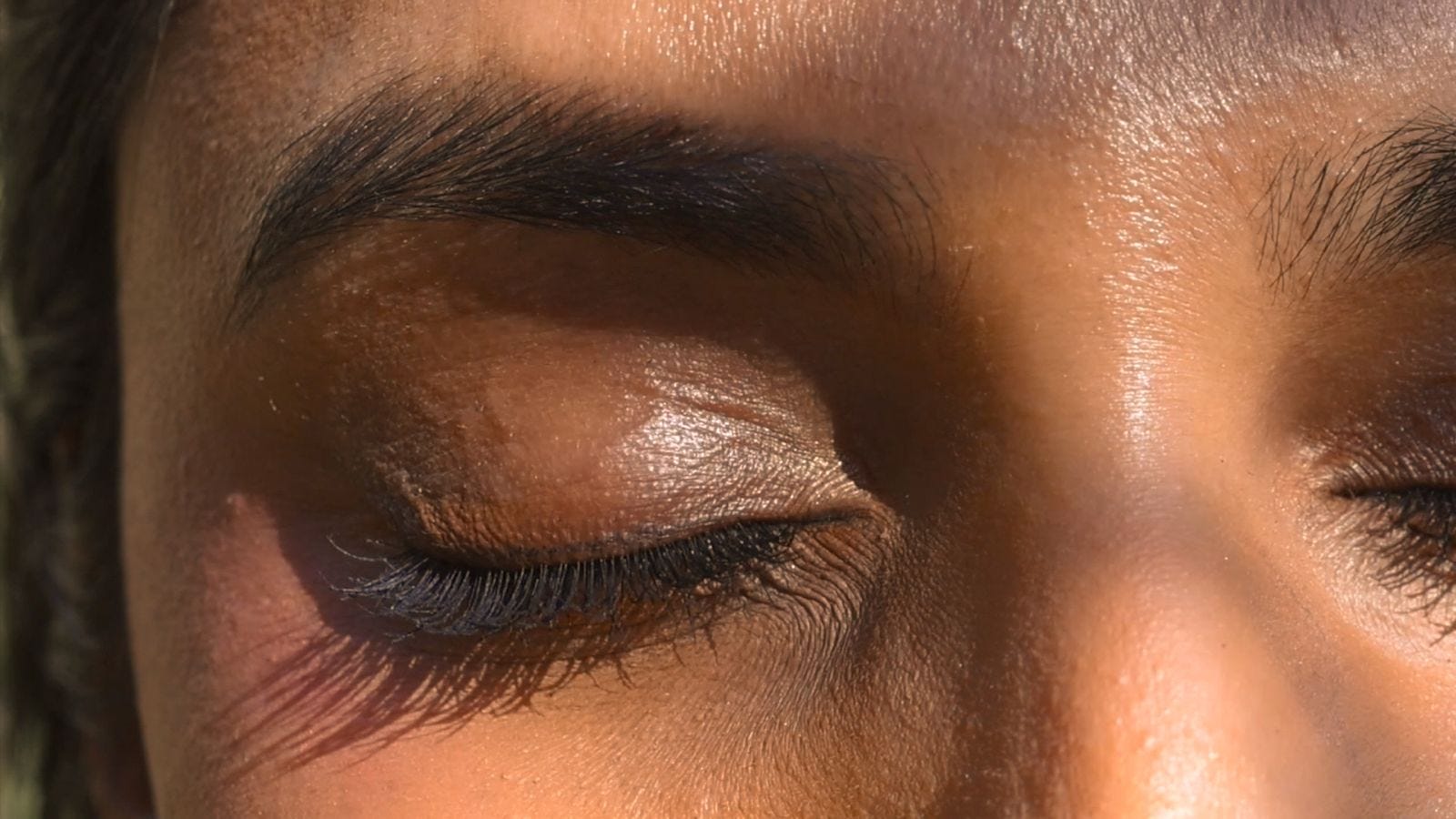
Our language, though being hijacked by technology, is also full of sensory metaphors, because the body is how we experience the world. We say ‘taste’ to describe our preference in music or fashion, we say ‘I hear you’ to mean I understand you, we say ‘that essay touched me’ to mean someone’s writing moved us emotionally.
Something in our cosmic constitution—including but beyond biology—longs for a momentary release from the unstoppable march of time. Like what Blake meant in Auguries of Innocence, it seems to be true that any engagement we have with reality, no matter how small, will reveal a glimpse of eternity. William Blake again:
To see a world in a grain of sand
And a heaven in a wild flower,
Hold infinity in the palm of your hand
And eternity in an hour.
UNLIKE THE STORY TOLD by science fiction, the machine probably won't win by conquest. Instead, like the cuckoo, it'll dominate us via parasitism—by hijacking our care and redirecting our attention. Like the warblers unable to distinguish the imposter among their precious ones, we will continue to give our focus to the wrong thing.
Our visceral experience of being alive isn't something machines are going to steal in battle. It's something we will relinquish slowly, moment by moment, each time we choose efficiency over embodiment; optimization over presence. So, how do we stop the machine from taking over?
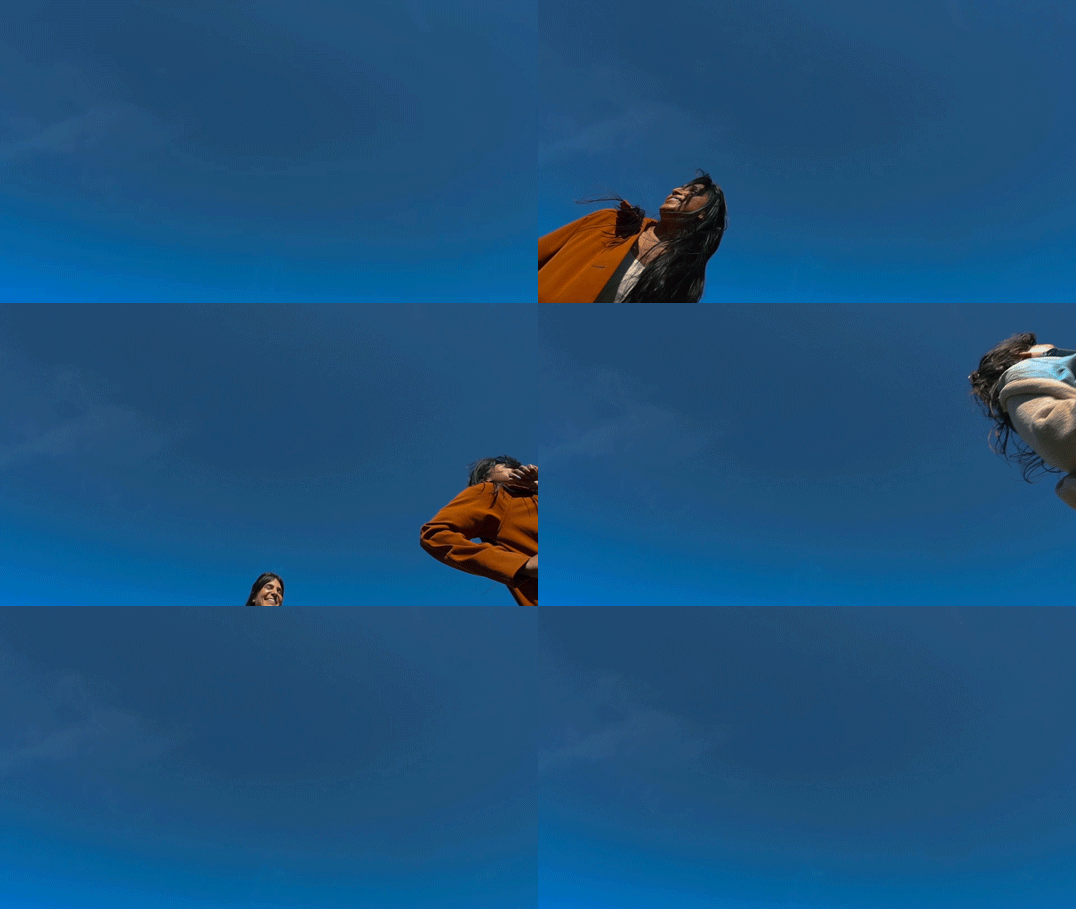
Maybe what we need is not an object to be known but a cause of wonder.
Wonder hides under the moss on the giant rocks by the sea. It sits lodged in forgotten diaries at the thrift store. It shimmers in the eyes of cats and the sound of waterfalls. It’s whatever leads to the depth; it leads to more, not less. It’s what Lord Byron meant by, “The great art of life is sensation, to feel that we exist, even in pain.” To sense is to participate, to live inside the world rather than above it or outside of it. To feel—to experience—is to be real.
📰 Read in print: Here’s the link to a quick tool for those who want to get their hands on this essay and read it analog style.

Sherry Ning
Writer
Sherry Ning is taking a deeper look at things. She writes about experiences you’ve had but don’t know how to describe—from falling in love to the feeling of self-sabotage to the joy of boredom. Her blog lives on www.sherryning.com, and her book, The Pluri Society, is for sale on Amazon.
📸 Photo & GIFs by Haydin Olivia
 | A guest post by
|