

Marriage-Coded
Rethinking dating in a digital age


This Weekly Edition of Inkwell features Peco Gaskovski & Ruth Gaskovski
“THERE’S ANOTHER UPSIDE to arranged marriage,” the young man declares. “Who knows you better than your parents? Who has your best interests at heart and can base their decision on qualities that go beyond physical attraction?”
Ding!
“Time’s up! Rebuttal, you’ve got 15 seconds to respond.”
A middle-aged woman rises energetically and turns to her opponent: “I have just one thing to say: my parents had an arranged marriage, and they hated each other!”
Cheers erupt from the group of guests piled tightly on an assortment of chairs, stools, and sofas. It’s a blustery winter night, with several inches of snow still on the way, but the living room is crowded with friends. Teens, young adults, married couples, and children gathered for a potluck supper followed by impromptu debates on mostly comical topics like, be it resolved everybody should wear cowboy boots, or real men don’t cry.
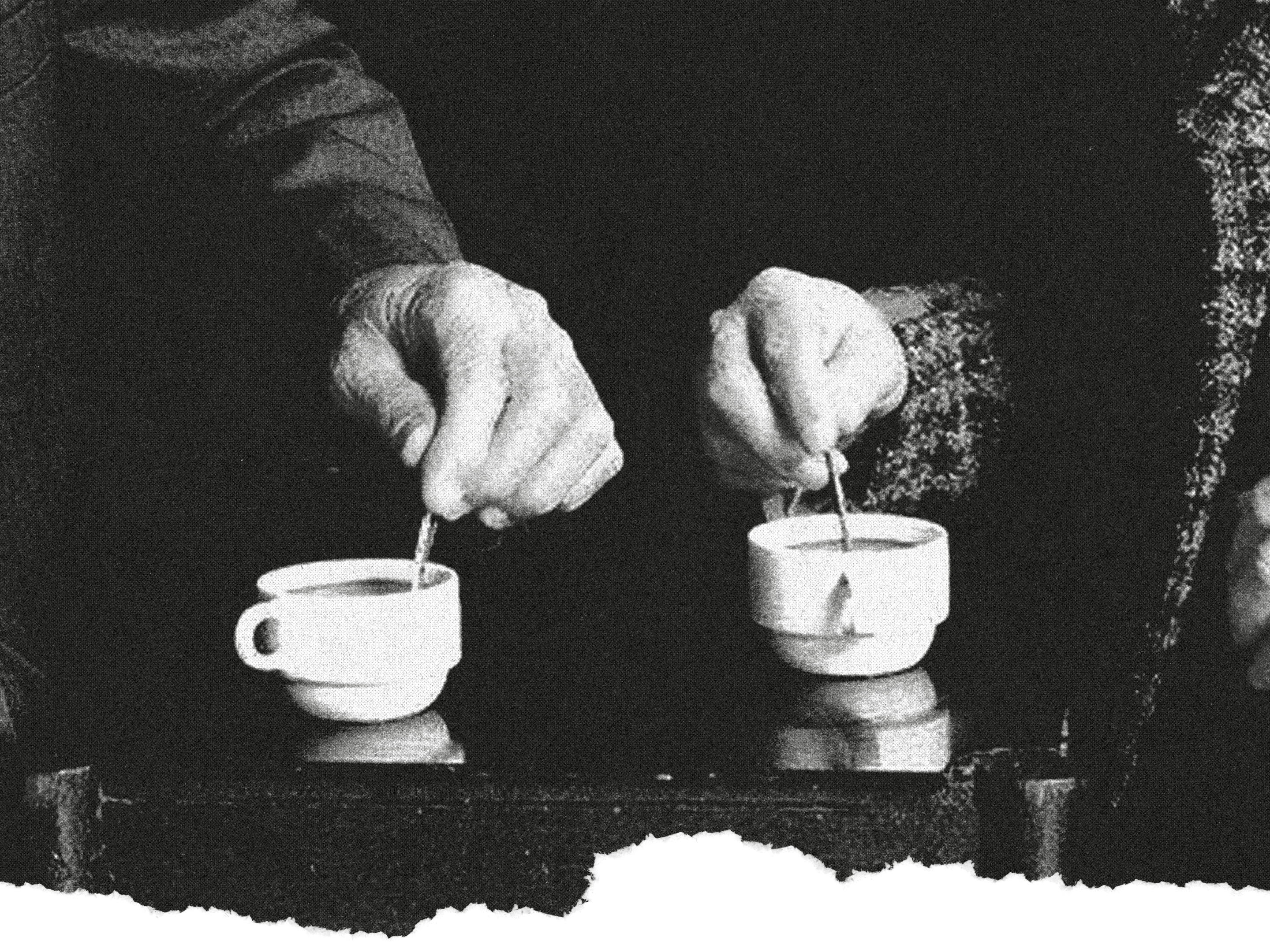
After a few more rounds of inane disputation, laughter, and some live guitar and song, the evening wraps up with applause for the co-host, Grandma Gaskovski. “OG Mrs. G”, as the Gen Z’s call her, stands a slender five feet tall, dwarfed amidst the crowd. “Thank you for coming,” says the 85-year-old woman, beaming. “It’s so wonderful to see people spending time together,” and then she takes a moment to recall festive gatherings in the old days in her native village in Macedonia.
But beyond the feasting, song, and laughter, something else is happening at such gatherings, then and now: young people meet and get to know each other in person. One of the main differences today, though, is that their ability to forge close bonds can be disrupted, ironically, by the very digital technologies that are designed to help them “connect”.

THE PROBLEM has been with us for some time now, as foreshadowed in an amusing monologue from the 2009 rom-com He’s Just Not That Into You:
I had this guy leave me a voice mail at work so I called him at home and then he e-mailed me to my Blackberry and so I texted to his cell and then he e-mailed me to my home account and the whole thing just got out of control. And I miss the days where you had one phone number and one answering machine… now you just have to go around checking all these different portals just to get rejected by seven different technologies. It’s exhausting.
The exhaustion has only worsened over the past 15 years and devolved into a loneliness crisis. For many young adults, the courtship activities of meeting, talking, and intimacy often begin on a screen and never quite escape it. But, what if technology, for all its accompanying woes, is not the real problem? What if tech only amplifies a more fundamental issue—our cultural obsession with self?
There is nothing wrong with being an individual, but our Western model encourages the development of a person who is all agency and appetite, with little constraint and minimal rootedness in a wider context. “Dating” itself is illustrative of this myopic model. Each person enters the dating space as a self-focused individual, free to do as they wish, but at the same time is rendered isolated and vulnerable, both emotionally and sexually.
In the past, societies provided structures that helped people get to know each other. Ancient tribes and old villages were populated not just by individuals, but by multigenerational families. To some extent, modern churches operate the same way. When you go to church, you don’t just go for personal salvation; it is, or should be, a place that supports the whole of life across the lifespan. Tribes, villages, and churches are all examples of communities with inbuilt generative structures, where human life is not understood as an isolated individual existing in the present, but as a body of people who exist across generations.
And yet, the way forward is not backwards. It’s not in returning to arranged marriages or some theocratic system, nor in trying to recapture an idyllic past that never existed. It begins by admitting that somewhere along the way, in our struggle to empower the individual, we eviscerated many of our generative values. To say so isn’t “trad”, it’s reality. No society has ever endured as a collection of me-first individualists, and neither will ours.
Generativity can happen in at least two ways. Literally, through having and raising children, and symbolically, through passing on knowledge, stories, and wisdom into the future. So, what could “dating” look like for someone operating within a generative model of reality, instead of an individualistic one?
IN STEUBENVILLE, OHIO, Bookmarx Books has been hosting “Jane Austen Balls,” where college students, high schoolers and families gather in a large hall for country and square dances, returning to an age-old tradition where young people getting to know each other happens in the context of a multigenerational community. That doesn’t mean people can’t meet privately, but it does affirm the generative meaning of dating: it’s about discerning who to spend your life with, rather than dating for merely thrill or romance.
Within our own local community, a group of young musicians has spearheaded regular country dances in a church gymnasium, drawing families and teens from a variety of backgrounds—Protestant, Catholic, and Orthodox, as well as non-religious visitors. The most recent events have grown to over two hundred attendees, prompting a search for a new venue, lest the gym floor collapse under the weight of the Virginia Reel.
These large-scale gatherings have also led to informal spin-off events including parties, debates, and sing-alongs. Elsewhere in town, teens might be swiping through faces on dating apps, but here there are only real human beings, forming relationships without the manipulation of an algorithmic structure.
We’ve recently begun hosting “supper salons” that allow for cross-generational dialogue. These aren’t match-making events, but gatherings in which symbolic generativity is free to take place through the cultivation of wisdom. Many of the conversations are energized by young adults’ desperate hunger for life direction, focusing on social values, theology, work, and finding love. Together we try to distinguish good ideas from bad ones, true from false—a much-needed tonic for the distorting digital forces pervading all our lives. Our goal is not to induce our young guests into any particular viewpoint, but to model, as best we can, the process of discernment.
These young people are keenly aware of the pitfalls of exploring relationships through digital platforms. Devices can give us a false sense of control, allowing us to airbrush ourselves to perfection, or maybe to rehearse that voice message again and again until it strikes the essential tone of “nonchalant yet interested”. It’s a Faustian bargain, where real people replace themselves with a digital doppelganger, inviting the awful feeling that nobody could love them for who they really are.
One guest, a 20-year old single woman, observed that the dopamine kicks we get from excessive phone use can also infect our experience of a prospective dating partner: anticipatory highs for that next notification, followed by slot-machine lulls of disappointment as we wait, and at last, when the response finally comes, a jackpot burst of excitement. But this roller-coaster experience of highs and lows can haunt young couples when they spend time face-to-face, as the dopamine-spiked emotions give way to lower-key feelings that may not be as thrilling, and even turn the other person into a letdown.
Even when two people find each other, share the same worldview, and have the same vision for marriage and family, their relationship can still be disrupted by “digital asynchrony”. When you put two pendulum clocks on the same surface, they eventually start swinging in synchrony. Something similar happens in close relationships: people synchronize. They learn how to turn-take in conversation, and often know just what to say because they spend so much time paying attention to each other. But, people tethered to their devices will most likely end up synchronized to them rather than one another. Committed relationships, including marriage and family, simply cannot properly develop, function, or flourish in the face of such asynchrony.
EXCESSIVE DEVICE USE can disrupt any human relationship, but for Christians, the disruption cuts into our two most vital relationships, the one with our spouse, the other with God. Christian spiritual history begins with man and woman described as “flesh of flesh”, and ends with a wedding feast in the Book of Revelation, and between these two bookends of time, the Church is the bride and Christ is the bridegroom. Beginning, middle, and end, it’s all marriage. And while generativity begins in the intimate between-space of marriage, it reaches outward, not just to children and family, but to include everybody who sees the fruitfulness of this model of reality. It’s a power that could change society.
Churches can encourage this change by organizing events that are not just age-specific, but rather multigenerational. Parents can also open their homes for meals and conversation, all which help build cross-generational dialogue. Wiser, older individuals who have seen the challenges and joys of commitment, can serve as supportive mentors to younger people, not by dictating choices, but by helping them place their choices in a lifelong and spiritual context.
But, the most basic step we can take toward generativity is to radically limit our device use, and in doing so restore our synchrony with real people and the real world. Conversations with seniors at the grocery store, chatting with kids in the neighbourhood, and keeping one’s ears free of Air Pods might not seem like much, but they help recenter focus on human beings rather than devices. In doing so, we can slowly restore our understanding of what it means to be connected to others, and maybe even committed to them.

IT’S BEEN A COUPLE of months since the “arranged marriage” debate at Grandma G's. Outside, the snow is finally starting to melt, and the hope of spring is here. A quick rap at the door announces that Levi has arrived early for this evening’s supper salon.
“And—did you ask her out?” we call out as his beaming face appears in the entry.
“Yes, I did!”
At our last gathering Levi announced he was done with “situationships”.
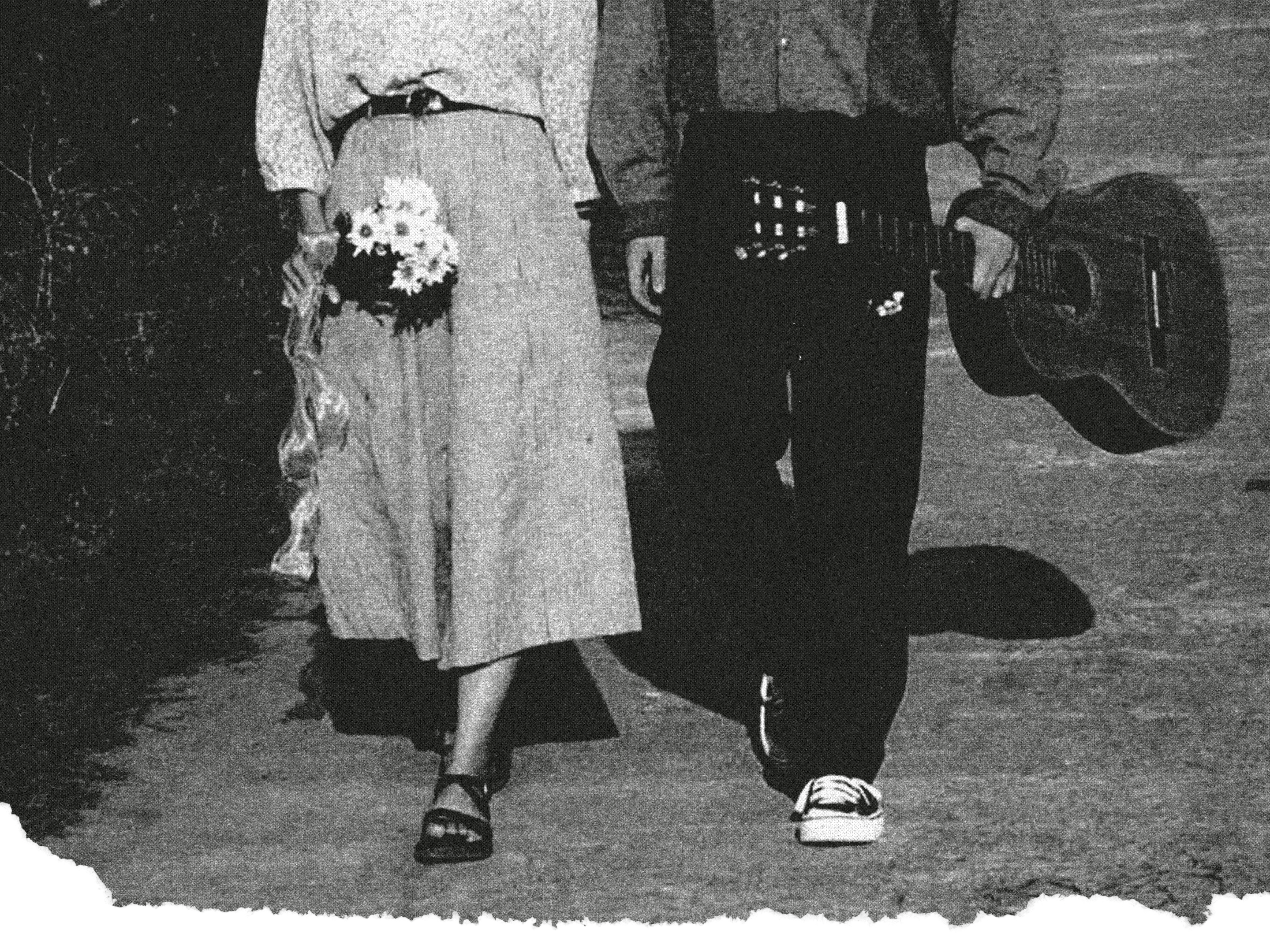
He plucked up his courage and invited a young woman he’d been admiring out to the next dance and she gave him a resounding yes. The next day he showed up with a bouquet of flowers at her door. Ever since, they’ve been going to dinner, taking walks, and spending a lot of time talking about their future.
There’s no telling where it might lead, but in a small way, they are defying the digital forces of our age and planting the seeds for a future generative way of life.
📰 Read in print: Here’s the link to a quick tool for those who want to get their hands on this essay and read it analog style.

Peco and Ruth Gaskovski
Writers
Peco and Ruth have been published in First Things, The Rabbit Room, and delivered the keynote address at the Doomer Optimism Gathering. Peco is the author of the science fiction novel Exogenesis and writes the newsletter Pilgrims in the Machine. Ruth and Peco offer guidance on navigating daily life in a digital age on School of the Unconformed.
📸 Imagery via Thief of Boredom
 | A guest post by
|
 | A guest post by
|
my wife would trade our story to say we met at a Jane Austen Ball in a heartbeat
loved reading this